Product Update - October 2026


What's New in IncidentHub in October 2026?
In the last few months we have focused more on improving the usefulness of our service status pages, added new sections for outages and reliability, and improved SEO (that's part of the business!). Product changes include new services and improvements in parsing and detection.

- What's New in IncidentHub in October 2026?
- New Sections for Reliability and Ongoing Outages
- Early Signals in Service Status Pages
- More Useful Service Status Pages
- Bits and Pieces
New Sections for Reliability and Ongoing Outages
The IncidentHub website now has these two new sections which do not require a login.
Reliability, Outage History and Analysis
This is a single page that shows overall uptime numbers for the last 12 months, a breakdown of major/minor outages by month, outages by component, comparison with similar services, root cause analysis of outages, and news and events for that service. It is a historical record of the overall reliability of a given service. It's handy when you are considering whether to switch to it, or away from it, or just doing research for an article or a report.
The first service we have added in this section is GitHub.
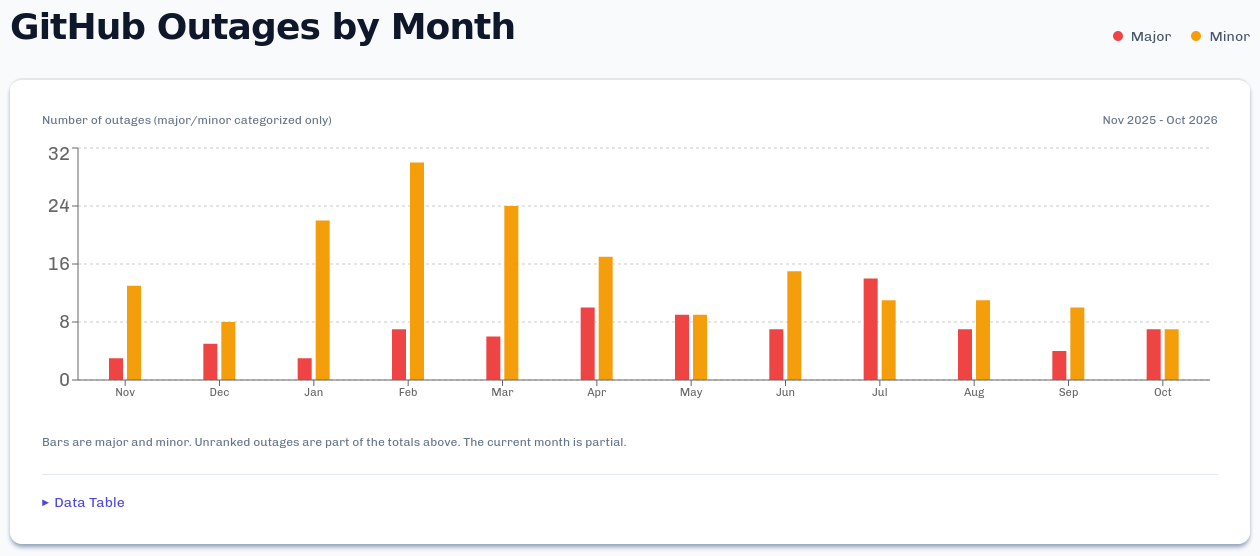
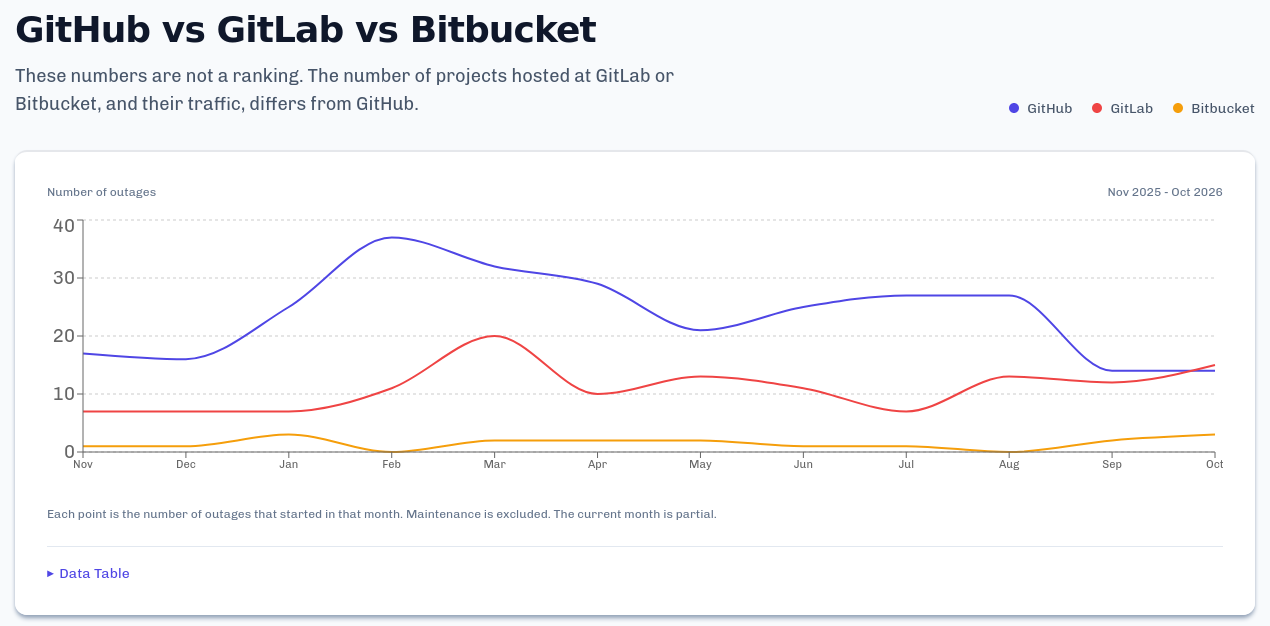
If you want to see the current status of GitHub, visit https://incidenthub.cloud/status/github. If you want to see the reliability history of GitHub, visit https://incidenthub.cloud/reliability/github.
In the months ahead, we will add more major services to this section.
Ongoing Outages
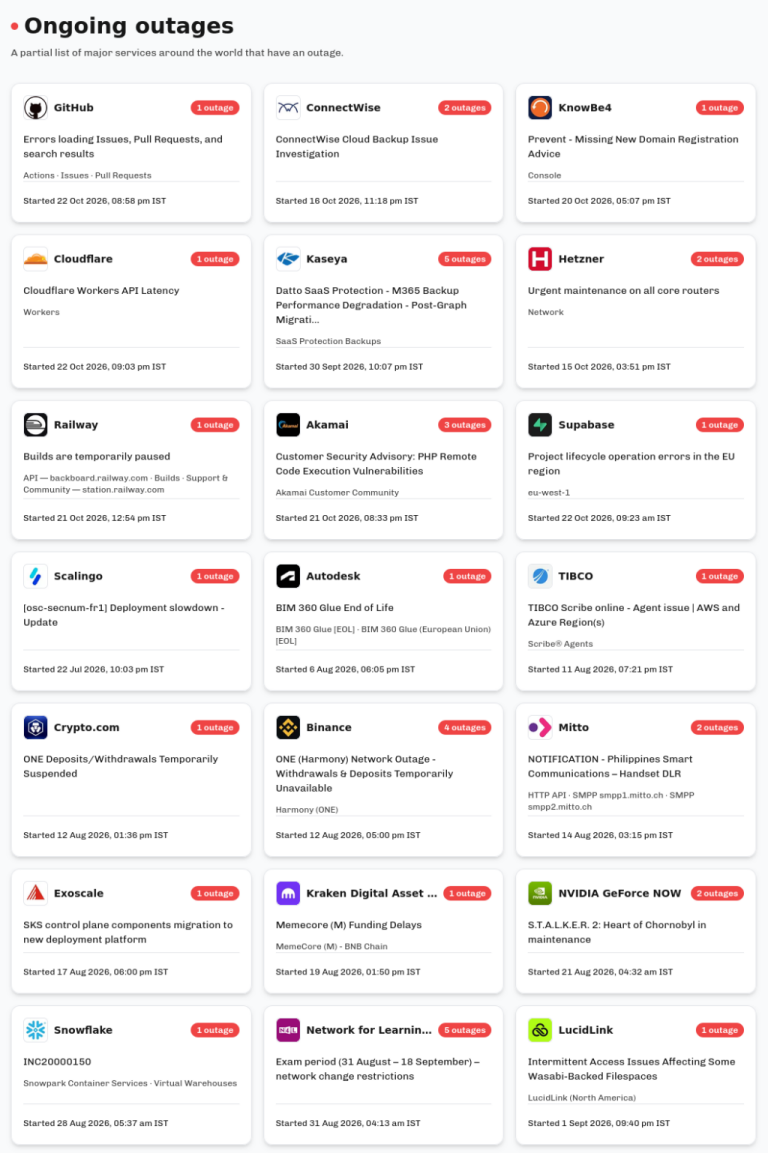
This is a single page that shows a partial list of major services around the world that have an outage.
Early Signals in Service Status Pages
Back in May we had announced the first version of the early signals feature in IncidentHub. We started with collecting and analyzing user reports. Since then, we have added other data sources to the mix and built our detection engine on top of that foundation.
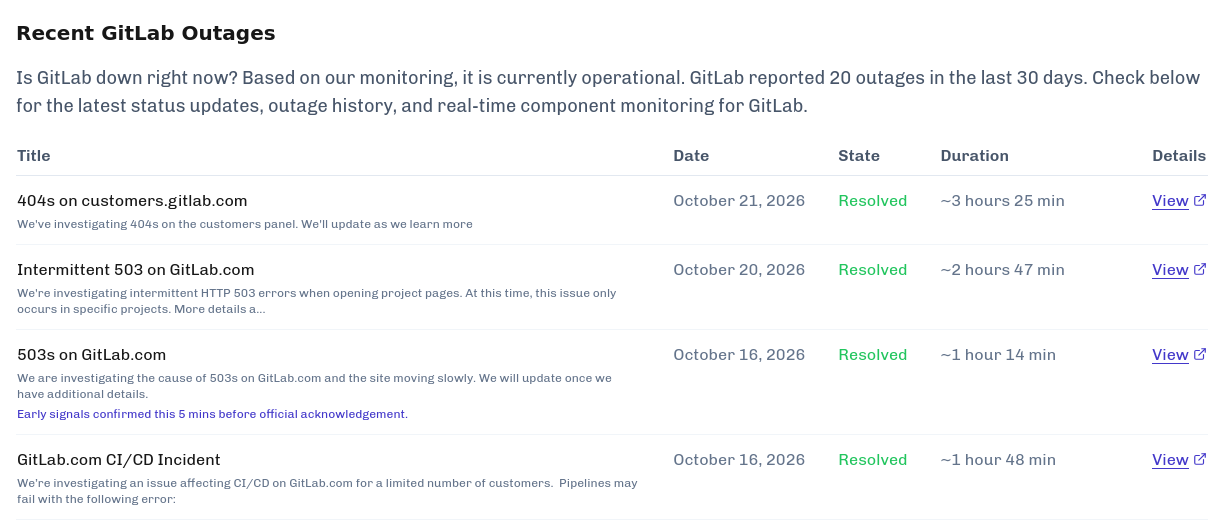
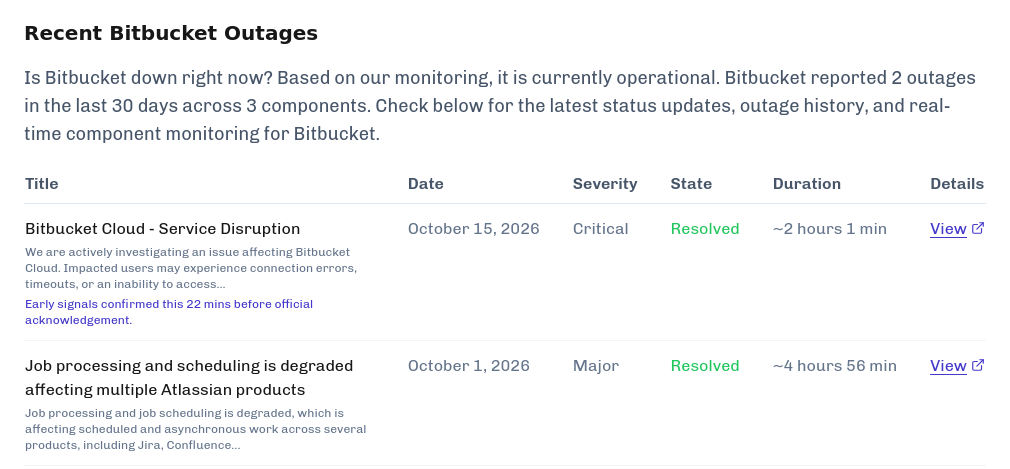
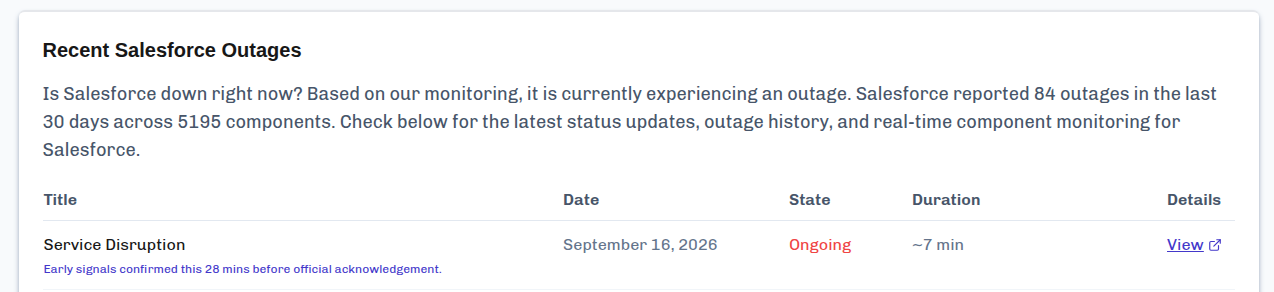
The service status pages now show when an early signal resulted in IncidentHub detecting the outage before the official status page announced it.
A few recent examples:
GitLab
BitBucket
Salesforce
We are continuing to fine tune the detection engine as well as add more data sources to it to improve the accuracy of the early signals. In the coming weeks, we will be rolling this out to our users, so that you can opt-in to see these alerts in your personalized status pages as well as in your alert channels.
More Useful Service Status Pages
Our individual service status pages now have more information about outages - severity and a snippet of the incident report. This is a small step towards making the pages more informative if you are looking to quickly check a service's status without logging into IncidentHub.
Bits and Pieces
Last but not least, we have added support for more vendors and improved the data collection and detection for some of the existing vendors. Services keep moving to different status page providers, and some have moved to their own status pages in recent times - no doubt due to the rise of AI-powered coding tools.
I'm also happy to announce that we now have a citations page where you can see where IncidentHub data was cited in news articles and industry reports.
Keep watching this space for more updates to IncidentHub.
IncidentHub is not affiliated with any of the services and vendors mentioned in this article. All the logos and company names are trademarks or registered trademarks of their respective holders. This article was first published on the IncidentHub blog.